ENGLISH (il testo italiano è
in fondo alla pagina)
This post launches a new section of 10e10.ch, devoted
to Art in Time and Time in Art. Thanks to exclusive access to
the archives of Galleria La Salita, a prominent art gallery in
Rome from 1957 to 1998, I will be able to feature works by
a few modern and contemporary artists that deal with the favorite subject of
this website – time. As it can be expected, they do so in an original, unusual,
sometimes puzzling way - the kind of timepieces you never get tired of
looking at, even though they do not actually tell the time.
The artist’s book titled “La Via del Sangue” is
a perfect example of this. Its author is the Greek Italian Jannis Kounellis
(1936-2017), the world-famous exponent of Arte Povera, who created it in
conjunction with an exhibition titled “Apollo” and held by Galleria La Salita in
1973.
“La Via del Sangue” was published by La Salita and printed by Nazareno
Iori from Rome in 290 numbered examples: 250 were offered to the public, 30
were not for sale and 10 were individually signed artist’s proofs.
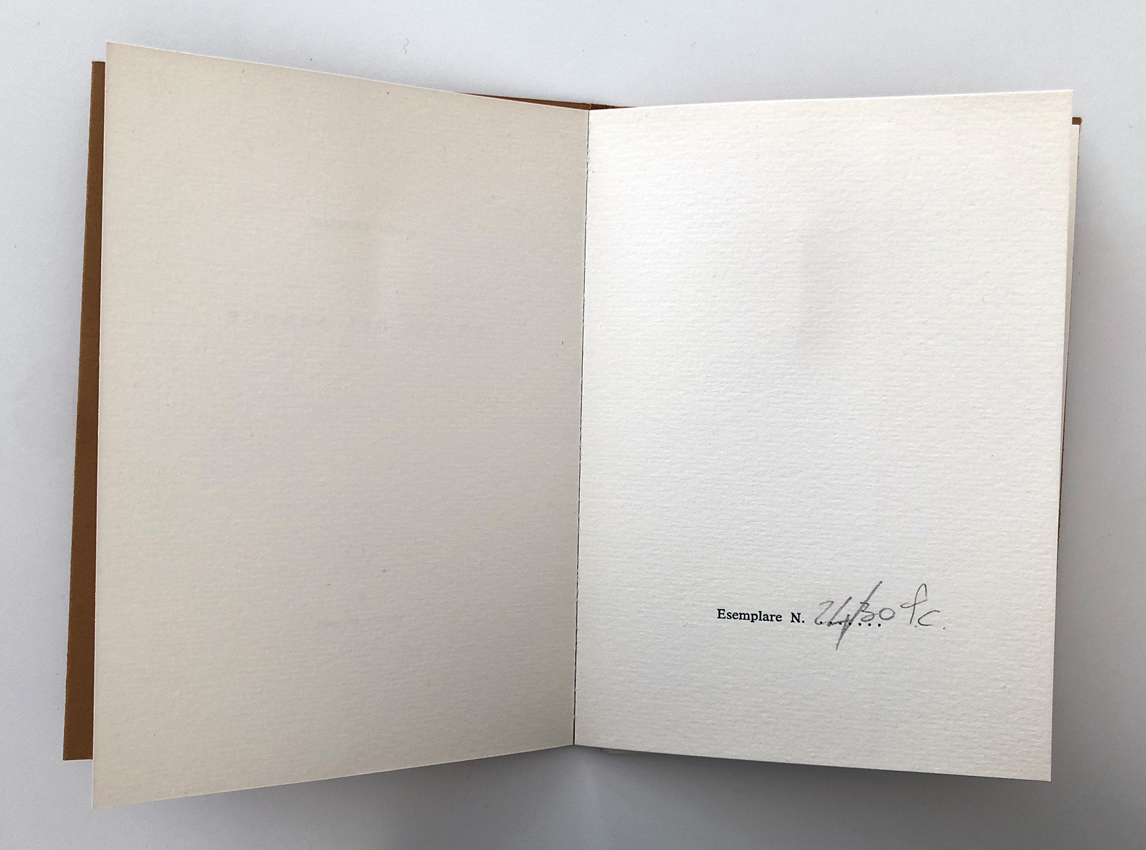
Each booklet was contained in a publisher’s printed slipcase. Its format is 15 x 11 cm (5.9 x 4.3 in.) and
the example seen here is number 24/30.
The
latest example of "La Via del Sangue" to surface at auction was part of
the 1-250 series. It was sold at Finarte / Minerva Auctions on 14
December 2016 for € 3,000.
Why choose “La Via del Sangue” to start the Art &
Time section? Because it is a weekly planner, albeit of a very peculiar sort, and
as such it relates to time. During the aforementioned exhibition, Kounellis went
to the gallery daily, struck a match and mounted it onto paper.
The result is a
booklet featuring seven burnt wood matches, each mounted onto a singed page
annotated by the artist himself with a day of the week. The simple
act of striking a match to mark each day of the week suggests a ritualized
cultural or religious expression, even one of penitence. In this instance,
Kounellis is indirectly invoking Apollo, known as the god of light and the sun,
to whom the exhibition was dedicated.
Associated with Arte Povera since the 1960s, Jannis Kounellis investigated
the alienation inherent in contemporary society, juxtaposing the materials of
mass urban and industrial civilization with symbols and values of the
pre-industrial world. Incorporating humble non-art materials such as cotton,
wool, coal, grain sacks, glass bottles, meat hooks, fire, soot, smoke,
bed-frames, doors, shelves, and clothing, Kounellis' work is a melodramatic
mixture of installation, environment, performance, and theatrical show.
ITALIANO
Questo post
inaugura una nuova sezione di 10e10.ch, dedicata all’Arte nel Tempo e al Tempo nell’Arte.
L’accesso esclusivo all’archivio de La Salita, galleria romana di primo piano tra il 1957 e il 1998, mi permetterà di presentare le opere di alcuni artisti moderni e
contemporanei che trattano il tema preferito di questo sito: il Tempo. Come si
può immaginare, esse lo fanno in modo originale, insolito, a volte
sconcertante. Si tratta di “segnatempo” che non ci si stanca mai di guardare,
anche se in realtà non dicono che ora è.

Il libro d’artista
intitolato “La Via del Sangue” ne fornisce un esempio perfetto. L’autore è il
greco-italiano Jannis Kounellis, celebre esponente dell’Arte Povera,
che lo creò in occasione della mostra dal titolo “Apollo”, organizzata da La
Salita nel 1973. “La Via del Sangue” fu pubblicato da La salita e stampato dalla
tipografia Nazareno Iori di Roma in 290 esemplari numerati: 250 in commercio,
30 fuori commercio e 10 prove d’artista firmate. Il libriccino si trovava all’interno
di in una custodia di cartoncino sulla quale erano stampati il titolo e il nome
dell’autore. Il formato è 15 x 11 cm. L’esemplare presentato in queste foto è
il numero 24/30.
L'esemplare
de "La Via del Sangue" apparso più recentemente sul mercato faceva parte
della serie numerata da 1 a 250. È stato aggiudicato da Finarte / Minerva
Auctions il 16 dicembre 2016 per 3.000 Euro.
Perché
scegliere “La Via del Sangue” per aprire la sezione Art & Time? Perché si
tratta di un agenda settimanale, sia pure di tipo molto particolare, e quindi è
in rapporto con il tempo. Durante la mostra citata, Kounellis si recò tutti i
giorni presso la Galleria, accese un fiammifero e lo attaccò sulla carta. Il
risultato fu un libriccino con sette fiammiferi, ciascuno montato su una pagina
bruciacchiata e annotata dall’artista con un giorno della settimana. Il
semplice atto di accendere un fiammifero per contrassegnare ogni giorno della
settimana suggerisce un’espressione culturale o religiosa ritualizzata, perfino
di penitenza. In questo caso, Kounellis sembra invocare indirettamente Apollo,
dio della luce e del sole, al quale è dedicata la mostra.

Esponente
dell’Arte Povera dagli Anni 60, Jannis Kounellis ha indagato l’alienazione
connessa alla società contemporanea, sovrapponendo i materiali della civiltà
urbana e industriale di massa ai simboli e ai valori del mondo preindustriale. Caratterizzata
dall’uso di materiali umili e non-artistici quali cotone, lana, carbone, sacchi
di iuta, bottiglie di vetro, ganci da macellaio, fuoco, fuliggine, fumo, telai
da letto, porte, scaffali e abiti, l’opera di Kounellis è una commistione
melodrammatica di installazione, ambiente, performance e spettacolo teatrale.