24.1.24

New releases - Alpina Heritage Carrée Mechanical 140 Years

This isn’t a piece inspired by a predecessor: it really is the original, made in 1938. Alpina has unearthed two 14-piece series of the Calibre 490, released 85 years ago; only a very few of these are still in existence. The fully-restored movements have been housed in a rectangular silver case.


19.1.24

Vintage ads - Omega (1944)

ENGLISH (il testo italiano è sotto l'immagine)
“The world’s most accurate watches are the 30mm Omegas from Switzerland”. Taken from the Argentinian trade magazine La Revista Relojera, this ad highlights the performances of the recently introduced 30 mm movements. These calibers enabled Omega to win precision contests and set records at the Geneva and Neuchâtel Observatories, as well as the Kew Teddington National Physical Laboratory (UK).
Do you like vintage watch ads? Visit the page about Watch Ads, the one and only two-volume pictorial history of communication and design in 20th Century watchmaking. Do you wish to know more? Watch the video clip about the publication and download the preview of Volume 1.
The vintage ads presented in this website are not featured in the Watch Ads books.
 

ITALIANO 
“Gli orologi più precisi del mondo sono gli Omega 30mm creati in Svizzera”. Tratto dal periodico specializzato argentino La Revista Relojera, l’annuncio sottolinea le prestazioni dei nuovi movimenti da 30 mm. Questi calibri consentirono a Omega di vincere competizioni e battere record presso gli Osservatori di Ginevra e Neuchâtel, e presso il National Physical Laboratory di Kew Teddington (Regno Unito).
Ti piacciono le pubblicità d'epoca? Visita la pagina su Watch Ads, l'unica storia illustrata in due volumi della comunicazione e del design nell'orologeria del Novecento. Vuoi saperne di più? Guarda il video sull'opera e scarica l'anteprima del Volume 1.Gli annunci pubblicitari d'epoca presentati in questo sito non sono tra quelli riprodotti nei volumi Watch Ads.


28.12.23

Shock absorbers - Dispositivi antiurto


ENGLISH

"If you do not have a blackboard at your disposal ... to explain the KIF ...". This early 1960s ad features the KIF Explainer, a demonstration model of the KIF shock absorber by Parechoc SA. The manufacturer offered it in two variants - above a display stand (see the picture below) or inside a wallet. It was intended for the sales staff of retailers as a marketing tool to persuade customers into the purchase of watches equipped with a shock absorber. Its price of 6 Swiss Francs included a color brochure. 


ITALIANO
"Se non avete una lavagna a vostra disposizione ... per spiegare il KIF ...". Questo annuncio dei primi Anni 60 mostra il "KIF explainer", un modello dimostrativo del dispositivo antiurto KIF prodotto da Parechoc SA. Il fabbricante lo proponeva in due versioni: sopra un piedistallo (vedi l'immagine qui sopra) o all'interno di una custodia. L'oggetto era destinato al personale di vendita dei negozi come strumento per convincere i clienti ad acquistare orologi provvisti di dispositivo antiurto. Il prezzo di 6 Franchi svizzeri comprendeva un opuscolo a colori.


28.11.23

Vintage Press - Journal Suisse d'Horlogerie (1935)


ENGLISH
Here (picture below) is how the Swiss Watchmaking Magazine (Journal Suisse d'Horlogerie) presented new models back in the 1930s. Two of these watches are sought-after items by modern day collectors. The Oyster Royal features a case that went on to become a Rolex signature design. The LeCoultre "day-date" is the first of a successful series of calendar watches by the brand. Spécialités Horlogères was the Swiss distributor of LeCoultre watches.


ITALIANO
Ecco (foto sopra) come la Rivista Svizzera dell'Orologeria (Journal Suisse d'Horlogerie) presentava le novità negli Anni 30. I collezionisti di oggi apprezzano molto due di questi orologi. L'Oyster Royal ha una cassa che sarebbe diventata emblematica della produzione Rolex. Il "day-date" LeCoultre è il primo di una serie di orologi con calendario della Casa. Spécialités Horlogères era il distributore svizzero degli orologi LeCoultre.


24.10.23

Vintage ad - A. Michel

ENGLISH
"Our company supplies all kinds of raw movements, anchor and cylinder, 5 to 20 lignes - We do not manufacture complete watches". This 1923 ad reminded industry players that A. Michel only made and supplied raw movements. In 1926, the company was among the founding members of the Ebauches S.A. group along with A.S. (A. Schild) and FHF (Fabrique d'Horlogerie de Fontainemelon).
Do you like vintage watch ads? Visit the page about Watch Ads, the one and only two-volume pictorial history of communication and design in 20th Century watchmaking. Do you wish to know more? Watch the video clip about the publication and download the preview of Volume 1.


ITALIANO  
"La nostra compagnia fornisce movimenti di ogni tipo, ad ancora o a cilindro, da 5 a 20 linee - Non produciamo orologi completi". Questo annuncio del 1923 ricordava ai professionisti del settore che A. Michel si limitava alla produzione e fornitura di movimenti grezzi. Nel 1926, la compagnia fu tra i membri fondatori del gruppo Ebauches S.A. insieme con A.S. (A. Schild) e FHF (Fabrique d'Horlogerie de Fontainemelon).
Ti piacciono le pubblicità d'epoca? Visita la pagina su Watch Ads, l'unica storia illustrata in due volumi della comunicazione e del design nell'orologeria del Novecento. Vuoi saperne di più? Guarda il video sull'opera e scarica l'anteprima del Volume 1.


24.9.23

Watches & Cars - IWC Ingenieur / Lancia B24

ENGLISH (il testo italiano è in fondo alla pagina)


This 1:18 diecast model reproduces the Lancia B24 Spider, the open sports variant of the Aurelia introduced in 1955. Designed by Pinin Farina, it was an icon of Italian motoring since its inception.


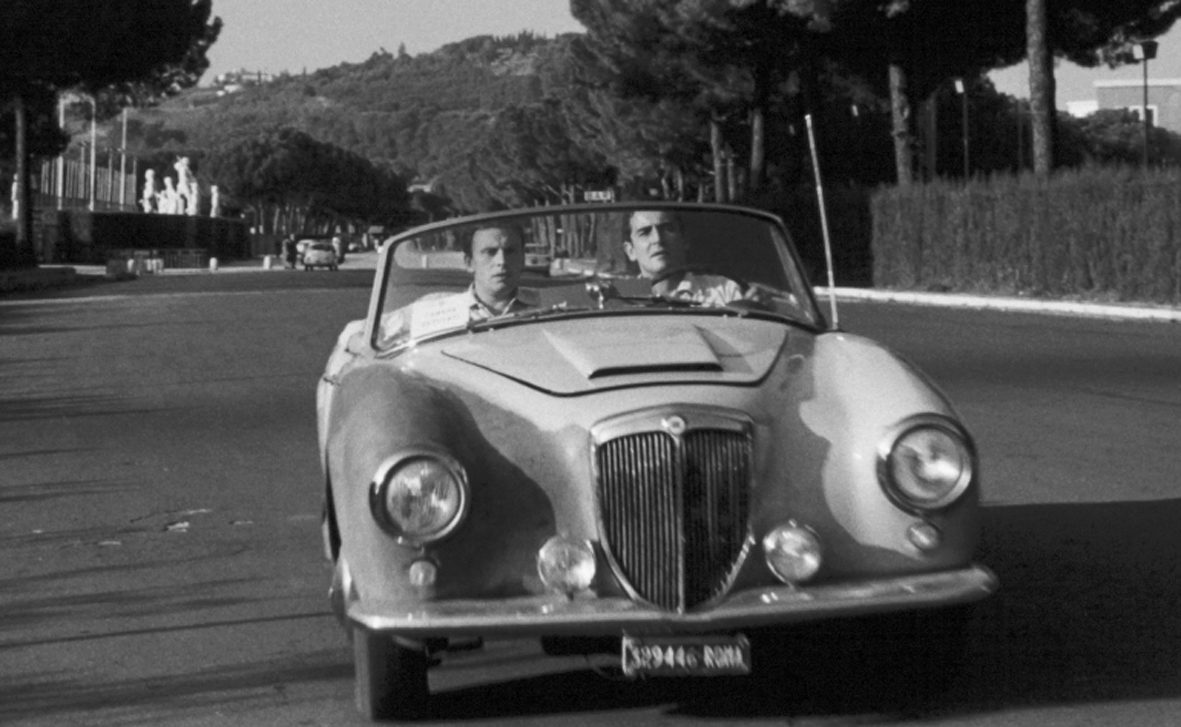
Its revised version – launched in 1956 – was fitted with a conventional windscreen with quarter windows rather than the wrap-around windscreen seen here. It famously featured in the classic 1962 road movie The Easy Life (above, a screen capture) by Dino Risi, ensuring its place in cinematic as well as automotive history.
Which watch would the owner of this vehicle have worn in the early 1960s? We do not necessarily think about someone like Bruno Cortona, the brash, loud and risk-taking co-protagonist of the film. This looks more like the car for a scientific-minded driver who could appreciate the 2,451 cc V6 engine and its acceleration. Why not a 40-ish engineer who was equally demanding when it came to the tech specs of his watch?


As the magnetic fields in his workplace affected timekeeping accuracy, the Ingenieur by IWC was the perfect choice. Its in-house self-winding movement enjoyed the 80,000 A/m protection guaranteed by the soft iron inner case, as well as the 100 m waterproofness offered by the stainless steel outer case. It goes without saying that such a timepiece was well prepared to be worn in the wind, while strapped on the wrist of a B24 driver.

ITALIANO
Questo modellino metallico in scala 1:18 riproduce la Lancia B24, variante sportiva dell’Aurelia presentata nel 1955. Disegnata da Pinin Farina, fu un’icona dell’automobilismo italiano fin dal debutto.


La versione successiva – lanciata nel 1956 – presentava un parabrezza di tipo convenzionale al posto di quello ricurvo che osserviamo qui. Fu protagonista del film di culto Il Sorpasso del 1962, diretto da Dino Risi, assicurandosi un posto nella storia del cinema.
Quale orologio avrebbe indossato il proprietario di questo veicolo nei primi Anni 60? Non ci riferiamo necessariamente a uno come Bruno Cortona, lo spavaldo, chiassoso e imprudente coprotagonista del lungometraggio. La vettura in questione sembra più adatta a un amante della tecnologia, in grado di apprezzare il motore da 2.451 cc e 6 cilindri a V, e la sua accelerazione. Perché non un ingegnere sulla quarantina, altrettanto esigente in fatto di segnatempo?


Visto che i campi magnetici nel suo luogo di lavoro alteravano la regolarità di marcia di un orologio convenzionale, l’Ingenieur di IWC rappresentava la soluzione ideale. Il suo movimento automatico di manifattura godeva della protezione fino a 80.000 A/m garantita dalla cassa interna di ferro dolce e dell’impermeabilità a 100 m offerta dalla cassa esterna d’acciaio. Ovviamente un orologio del genere sopportava senza alcun problema il vento, mentre si trovava al polso di un automobilista alla guida di una B24.


14.9.23

Vintage tools - The hairspring counter


ENGLISH
This 1950s ad by Vacheron & Constantin features a hairspring counter as an icon of their "beautiful precision". This tool enables the expert watchmaker to adjust an hairspring by visually comparing it with a master balance vibrating at a set frequency. The set of jaws is designed to hold a hairspring that is fitted to a balance wheel. A lever under the base rotates the tool in order to get the master balance and attached balance oscillating. The aim is to get both balances oscillating in sync for at least 20 seconds, which in turn shows they are both vibrating at the same frequency. 


ITALIANO  
Pubblicato negli Anni 50, questo annuncio di Vacheron & Constantin (foto in alto) sceglie un contatore di oscillazioni come icona della sua "Bella precisione". Lo strumento permette all'orologiaio esperto di regolare una spirale confrontandola visivamente con un bilanciere campione che oscilla a una frequenza definita. La pinza che sporge dal braccio dello strumento trattiene una spirale collegata a un bilanciere. Premendo la leva visibile si mettono in movimento il bilanciere campione e quello da regolare. Lo scopo è farli oscillare entrambi per almeno 20 secondi, in modo da verificare se la frequenza è la stessa.

24.8.23

Vintage Ads - Hercules (1939)

ENGLISH (il testo italiano è sotto l'immagine)
Founded in 1908, the Reconvilier Watch Company registered several brand names, among which Hercules for its sturdiest products.
Do you like vintage watch ads? Visit the page about Watch Ads, the one and only two-volume pictorial history of communication and design in 20th Century watchmaking. Do you wish to know more? Watch the video clip about the publication and download the preview of Volume 1.
The vintage ads presented in this website are not featured in the Watch Ads books.
 
 
ITALIANO 
Fondata nel 1908, la Société Horlogère de Reconvilier registrò numerosi marchi, fra i quali Hercules per i suoi modelli più robusti.
Ti piacciono le pubblicità d'epoca? Visita la pagina su Watch Ads, l'unica storia illustrata in due volumi della comunicazione e del design nell'orologeria del Novecento. Vuoi saperne di più? Guarda il video sull'opera e scarica l'anteprima del Volume 1.
Gli annunci pubblicitari d'epoca presentati in questo sito non sono tra quelli scelti per i volumi Watch Ads.


31.7.23

Vintage press - Journal Suisse d'Horlogerie (1942)

ENGLISH (il testo italiano è in fondo alla pagina)
Summer 1942: as the world was at war, in neutral Switzerland Geneva celebrated the 2000th anniversary from its foundation with an exhibition held at the Hôtel de Russie. Montres et Bijoux de Genève (Watches and Jewels from Geneva) was meant to showcase the craftmanship of local artisans and manufacturers through a display of old and new products.


The Journal Suisse d’Horlogerie published a richly illustrated brochure featuring articles written by executives of such prominent Geneva companies as Patek Philippe, Vacheron Constantin and Jaeger-LeCoultre - the latter's sales offices being based in Geneva. The texts also included contributions by the local watchmaking school and Observatory, as well as the Swiss Watchmaking Federation. Unexpectedly for a brand that highly valued the benefits of communication, Rolex was not among the contributors. On the other hand, the company ensured its presence through two ads and, significantly, two color pages featuring lavishly enameled watches from the personal collection of Hans Wilsdorf, the company’s founder and owner (see photo below). 
Two color pages were devoted to contemporary jewels and watches. The latter displays two products that are readily identifiable to modern day collectors – the Ref. 4240 full calendar wristwatch by Vacheron et Constantin and the Ref. 3372 Oyster Perpetual (“Bubbleback”) by Rolex (below). This brochure is number 49 of the 300 that made up the edition meant for special guests of the exhibition. The Journal Suisse d’Horlogerie also published 4’500 examples for the general public.

  
ITALIANO
Estate 1942: mentre il mondo era in Guerra, nella neutrale Svizzera Ginevra celebrava i 2000 anni dalla fondazione con una mostra organizzata presso l’Hôtel de Russie. Montres et Bijoux de Genève (Orologi e Gioielli di Ginevra) aveva lo scopo di far conoscere la maestria degli artigiani e dei fabbricanti locali attraverso l’esposizione di prodotti antichi e moderni.


Il Journal Suisse d’Horlogerie pubblicò un numero speciale riccamente illustrato, comprendente articoli scritti da dirigenti di Case ginevrine di primo piano come Patek Philippe, Vacheron Constantin e Jaeger-LeCoultre, che a Ginevra aveva la sede commerciale. Vi appaiono inoltre contributi della scuola d’orologeria e dell’Osservatorio locale, nonché della Federazione orologiera svizzera. Stranamente per una Casa che attribuiva un ruolo importante alla comunicazione, Rolex non collaborò alla stesura dei testi, ma assicurò la propria presenza con la pubblicità e, significativamente, due pagine a colori con le immagini di splendidi orologi smaltati appartenenti alla collezione personale di Hans Wilsdorf, fondatore e proprietario dell’azienda (seconda foto dall'alto). Due pagine a colori sono dedicate alla produzione contemporanea di gioielli e orologi. Su quest’ultima appaiono due oggetti facilmente riconoscibili per gli appassionati di oggi (terza foto dall'alto): il calendario completo Ref. 4240 di Vacheron et Constantin e l'Oyster Perpetual (“Ovetto”) Ref. 3372 di Rolex. Questa brochure è la numero 49 della serie di 300 che componevano l’edizione destinata ai visitatori di riguardo della mostra. Il Journal Suisse d’Horlogerie ne pubblicò anche 4.500 copie per il pubblico.


18.7.23

Vintage library - The Canton of Neuchâtel (1948)

ENGLISH (il testo italiano è in fondo alla pagina)
In 1948, the Canton of Neuchâtel celebrated its 100th anniversary as a Republic associated to the Swiss Confederation. This 700-page book, published by the Canton’s government and printed by Courvoisier from La Chaux-de-Fonds, deals with the local economic and cultural life.

Watchmaking does the lion’s share of the industrial activities as a whole, making up half the pages of the relevant chapter.

A few timepieces manufactured in the Canton. Collectors will readily recognize the Breitling Chronomat.

A workshop at Fontainemelon, the world’s oldest raw movements manufacturer.

The second half of the book features the portraits of several companies. A 3-page report deals with Spillmann & Cie., a casemaker from La Chaux-de-Fonds. The text points out that Spillmann manufactures waterproof watch cases since 1926 and gives a few interesting details about the production process, but does not disclose the name of the company’s main customer. We now know that it was Rolex, which entrusted Spillmann with the industrialization of the Oyster patent.

ITALIANO
Nel 1948, il Cantone di Neuchâtel celebrò i 100 anni dalla sua fondazione come Repubblica associata alla Confederazione Elvetica. Questo libro di 700 pagine, pubblicato dal governo locale e stampato da Courvoisier di La Chaux-de-Fonds, tratta la vita economica e culturale della regione.
L’orologeria fa la parte del leone nel settore della produzione industriale, occupando metà delle pagine del relativo capitolo.
Terza foto dall'alto: alcuni orologi prodotti nel Cantone. I collezionisti riconosceranno subito il Chronomat di Breitling.
Quarta foto dall'alto: un reparto di Fontainemelon, il produttore di movimenti grezzi più antico del mondo.
Ultima foto: la seconda metà del libro contiene i ritratti di numerose ditte. Tre pagine sono dedicate a Spillmann & Cie., fabbricante di casse a La Chaux-de-Fonds. Il testo sottolinea che Spillmman produce casse impermeabili fin dal 1926 e fornisce dettagli interessanti sul processo di fabbricazione, ma non rivela il nome del cliente principale. Oggi sappiamo che si trattava di Rolex, che affidò a Spillmann l’industrializzazione del brevetto Oyster.


21.6.23

Vintage movements - Peseux (1950s)


ENGLISH (il testo italiano è in fondo alla pagina) 
Peseux was a raw movement (ébauches) manufacturer founded in 1923 by Charles Berner in the namesake village Peseux (Canton of Neuchâtel). In 1933, when its annual output reached over 215,000 pieces and its workforce consisted of 76 people, the company became a part of the Ebauches SA group.


This transparent plastics display dating back to the 1950s was meant for Peseux agents who travelled to meet their customers, namely the purchasing managers of watchmaking concerns, and show them the latest products.


The selection seen here features both shaped and round movements, allowing for the production of timepieces ranging from the small rectangular models for ladies to the ultra-thin watches for men. The movements’ diameters are listed in lignes (the triple apostrophe symbol), a centuries-old unit of measurement equivalent to 2.26 mm.


The best known round movement by Peseux was the 12 ½-ligne Caliber 260. It equipped the Chronometers made by Ulysse Nardin, which took part in several Neuchâtel Observatory accuracy contests, winning a third (1955) and a second (1958) place.           

ITALIANO
Peseux era un fabbricante di movimenti grezzi (ébauches) fondato nel 1923 da Charles Berner nella località omonima del Canton Neuchâtel. Nel 1933, quando entrò nel gruppo Ebauches SA, aveva una produzione annuale superiore a 215.000 pezzi e dava lavoro a 76 dipendenti.
Questo espositore di plastica trasparente era destinato agli agenti Peseux che viaggiavano per incontrare i clienti, in particolare i responsabili acquisti delle Case orologiere, e mostrare loro le ultime novità. Nella gamma presentata qui appaiono movimenti di forma e rotondi grazie ai quali si potevano produrre orologi che andavano dai modelli rettangolari per signora agli ultrapiatti per uomo. Il diametro dei movimenti è espresso in linee (il simbolo del triplo apostrofo), antica unità di misura equivalente a 2,26 mm. 
Il movimento rotondo più noto era il Calibro 260 (vedi immagine qui sopra) da 13 ½ linee, che equipaggiava i cronometri Ulysse Nardin. Quest’ultima partecipò più volte ai concorsi di precisione dell’Osservatorio di Neuchâtel, conquistando un terzo (1955) e un secondo (1958) posto.


23.5.23

Vintage Ads - Repco (1957)

ENGLISH
"Cuffette - Not just an improvement – A thoroughly new watch ". Meant for retailers, this ad guaranteed that the watch set in a cufflink was sure to make an impact on their customers as well as their turnover. The cufflinks were available in a number of different shapes and fitted with “high quality movements”. Repco was a trademark registered by Balmer & Gagnebin from Tramelan in 1944.  
Do you like vintage watch ads? Please visit the page about Watch Ads, my two-volume pictorial history of communication and design in 20th Century watchmaking. You can also watch the video clip about the publication and download a 20-page preview of Volume 1.
The vintage ads presented in this Blog are not featured in the Watch Ads books.


ITALIANO
“Cuffette – Non è solo un’evoluzione – È un orologio di concezione inedita”. Indirizzato ai rivenditori, questo annuncio garantiva che l’orologio inserito in un gemello da polso avrebbe avuto un impatto sicuro sui clienti e dunque sul fatturato del negozio. I gemelli erano disponibili in numerose varianti ed equipaggiati con “movimenti di qualità eccellente”. Repco era un marchio registrato da Balmer & Gagnebin di Tramelan nel 1944.
Ti piacciono le pubblicità d'epoca? Visita la pagina dedicata a Watch Ads, la mia storia illustrata in due volumi della comunicazione e del design nell'orologeria del Novecento. Puoi anche guardare il video sull'opera e scaricare l'anteprima di 20 pagine del Volume 1.
Gli annunci pubblicitari d'epoca presentati in questo Blog non sono inseriti nei volumi Watch Ads.


18.5.23

Vintage press - La Suisse Horlogère (1977)


ENGLISH (il testo italiano è in fondo alla pagina)
La Suisse Horlogère was the official organ of the Swiss Watch Chamber of Commerce. This issue dating back to the Summer of 1977 was mostly devoted to the annual Basle Fair and the trends visitors could observe.


"Never have watches been so beautiful”, claims the title of the main article. Despite the worries about the plunging prices of quartz timepieces, the general mood was rather optimistic. The magazine pointed out that mechanical watches were “better and better still” thanks to caliber standardization, simpler design and higher quality: the newly introduced self-winding movement by Longines was mentioned. At the same time advanced models suggested that Switzerland was at the forefront in electronics as well. The local industry focused on analogue rather than digital watches, estimating that the LCD system was increasingly reserved for multifunctional timepieces.


The following pages feature a few products of the ETA Flatline collection, which included both automatic and quartz calibers. They met the growing demand for ultra-flat watches and super-accurate quartz watches with analogical display.


An interesting five-page report deals with the history of raw-movement production (ébauches) in Switzerland from the beginnings in the 18th Century to the 1970s. 

ITALIANO
La Suisse Horlogère era l’organo ufficiale della Camera di Commercio svizzera dell’orologeria. Questo numero dell’estate 1977 è dedicato principalmente all’annuale Fiera di Basilea e ai trend emersi nel corso della manifestazione. “Gli orologi non sono mai stati così belli”, annuncia il titolo dell’articolo principale. Malgrado le preoccupazioni per i prezzi in picchiata degli orologi al quarzo, l’ambiente manifestava un certo ottimismo. La rivista sottolineava che gli orologi meccanici erano “in continuo miglioramento” grazie alla standardizzazione dei movimenti, alla semplificazione dei progetti e alla qualità più elevata: tra gli esempi si cita il nuovo movimento automatico Longines. Allo stesso tempo la produzione di modelli tecnologicamente avanzati indicava che la Svizzera era all’avanguardia anche nell’elettronica. L’industria locale si andava specializzando negli orologi analogici, stimando che l’affissione digitale si identificasse sempre più con i modelli multifunzione.
Le pagine seguenti mostravano alcune novità della collezione ETA Flatline, comprendente movimenti automatici e al quarzo che rispondevano da una parte alla domanda crescente di orologi extrapiatti, dall’altra a quella di modelli analogici e ultraprecisi al quarzo.
Un interessante servizio di cinque pagine tratta la storia della produzione dei movimenti grezzi (ébauches) in Svizzera dalle origini nel 18esimo secolo agli Anni 70.